Data Representation through States and State Derivatives
D = dS/dt
The General Theory of Data Physics examines how industrial information relates to physical entities, states, state change and digital representation. Within this framework, D = dS/dt provides a conceptual perspective on state change in dynamic contexts, rather than a mandatory data format or technical architecture.
Foundational Research Principles
These principles provide a framework for understanding how digital states may be represented, interpreted and exchanged across heterogeneous environments.
Principle I:
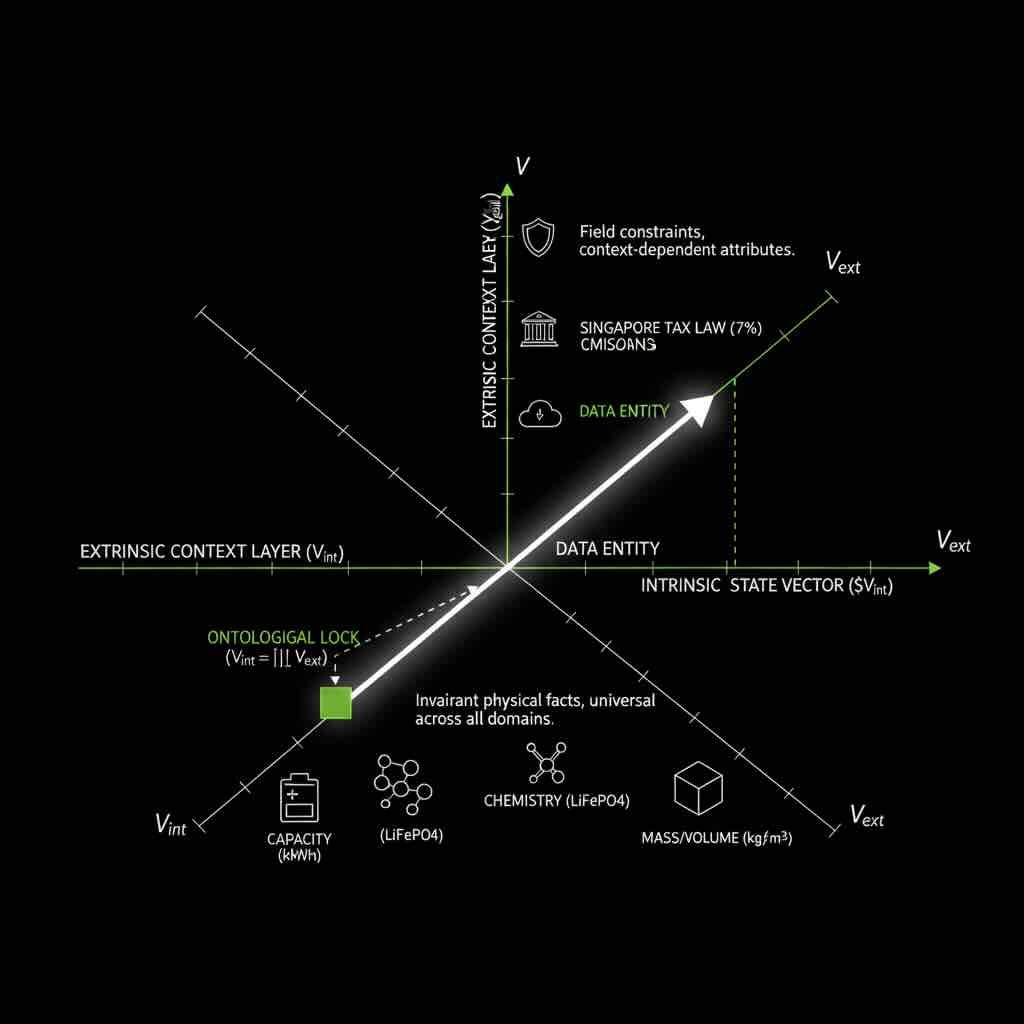
Ontological Orthogonality
Intrinsic State Vectors: Physical characteristics derived from observable measurements and operational evidence. These characteristics may remain consistent across different application contexts.
Extrinsic Context Layers: Context-dependent attributes derived from regulatory, commercial, environmental or organizational requirements.
Principle II:
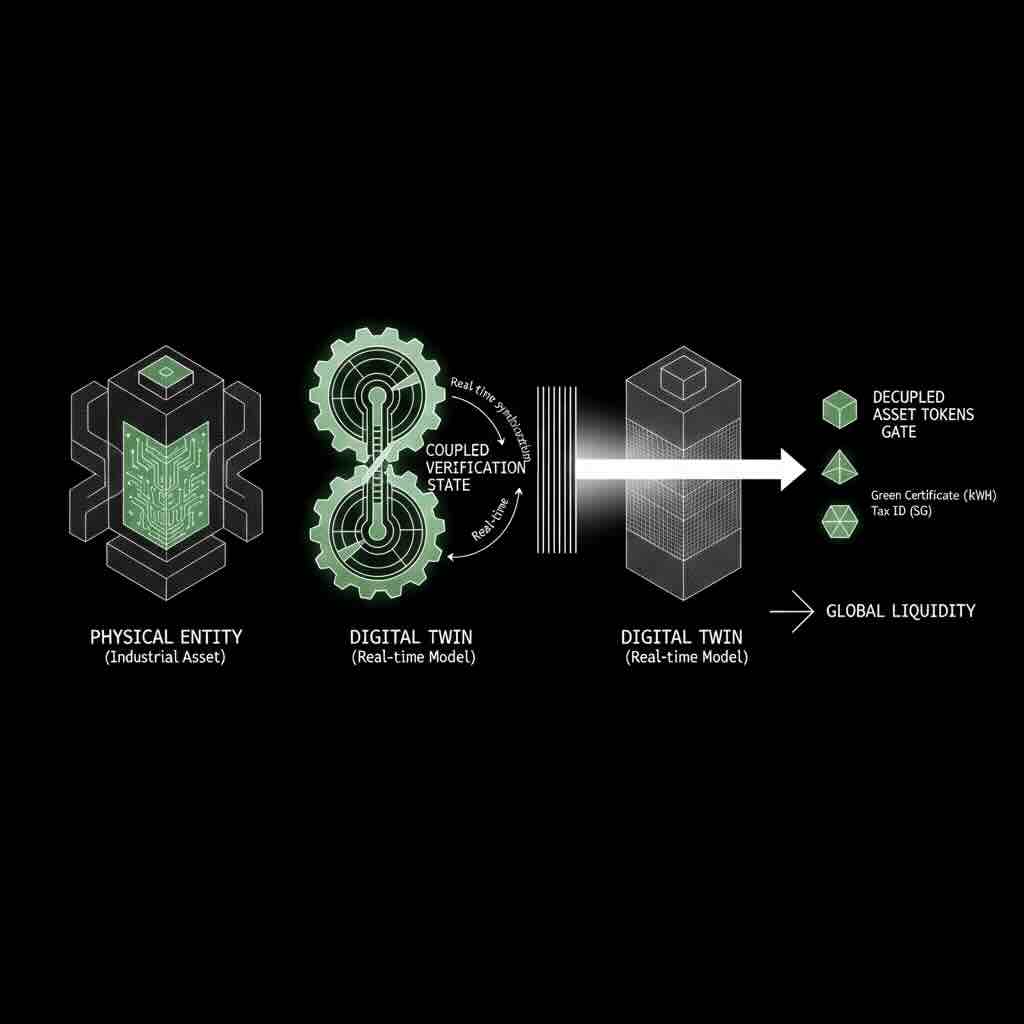
State Coupling Mechanics
Coupled Verification States: Verifiable linkage between a physical entity’s lifecycle and its digital representation, where ongoing state alignment is required.
Decoupled Digital Attributes: Structured representations of specific attributes or claims that may be interpreted, reported or exchanged across different application contexts.
Principle III:
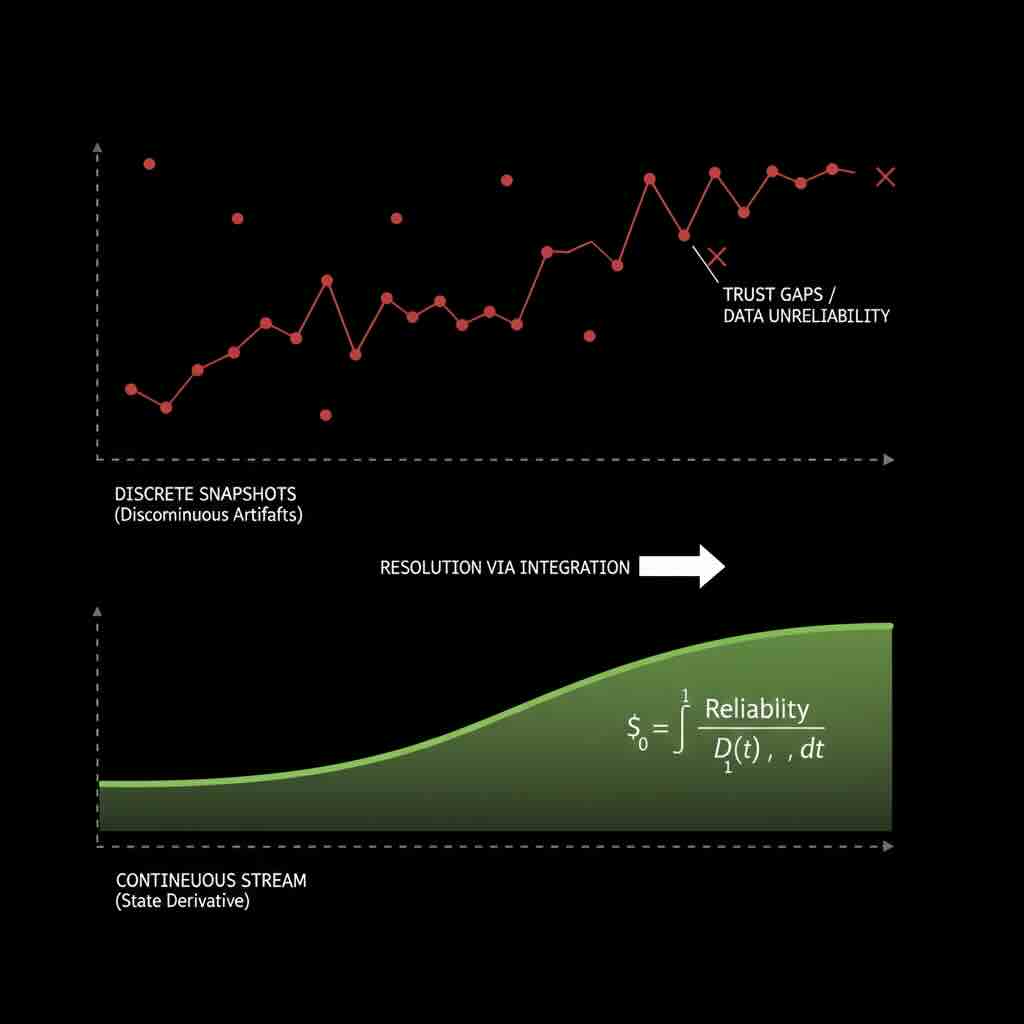
Temporal Continuity Principle
Trust in a digital representation may be strengthened by verifiable state histories associated with the lifecycle of a physical asset.
Continuous or event-based state histories can reduce the limitations of isolated snapshots and support stronger auditability where dynamic state data is relevant.
Why Trusted State Representations Should Be Formed at Source
Cross-domain exchange does not begin solely with moving data. It also requires consideration of how the state of a physical entity is represented, for what purpose, within what time context and under which conditions it may be relied upon.
The source domain often retains the closest operational relationship with the physical entity, its records, responsible actors and supporting evidence. Where appropriate, trust-relevant state representations may therefore be formed as close to the source as practicable.
Data Physics provides a conceptual perspective on entity, state, state change and representation. Trust at Source separately examines the source-side conditions under which product-related information may be relied upon. Neither framework prescribes a specific software component, protocol, platform or deployment model.
In the Bita Trust Knowledge Architecture, Data Physics provides the foundation, Trust at Source examines source-side trust formation, and GTSE addresses the exchange of trusted state representations across domains.
Publication and Priority Record
These repositories document the public publication, authorship and development record of the Data Physics framework. They do not by themselves constitute external scientific, regulatory or standards endorsement.
The State Derivative framework (D = dS/dt) is documented through publicly accessible research repositories. This timestamp records the publication of the original research framework.
The SSRN record documents the public availability, authorship and development history of the research. Repository publication does not by itself constitute scientific, regulatory or standards endorsement.